
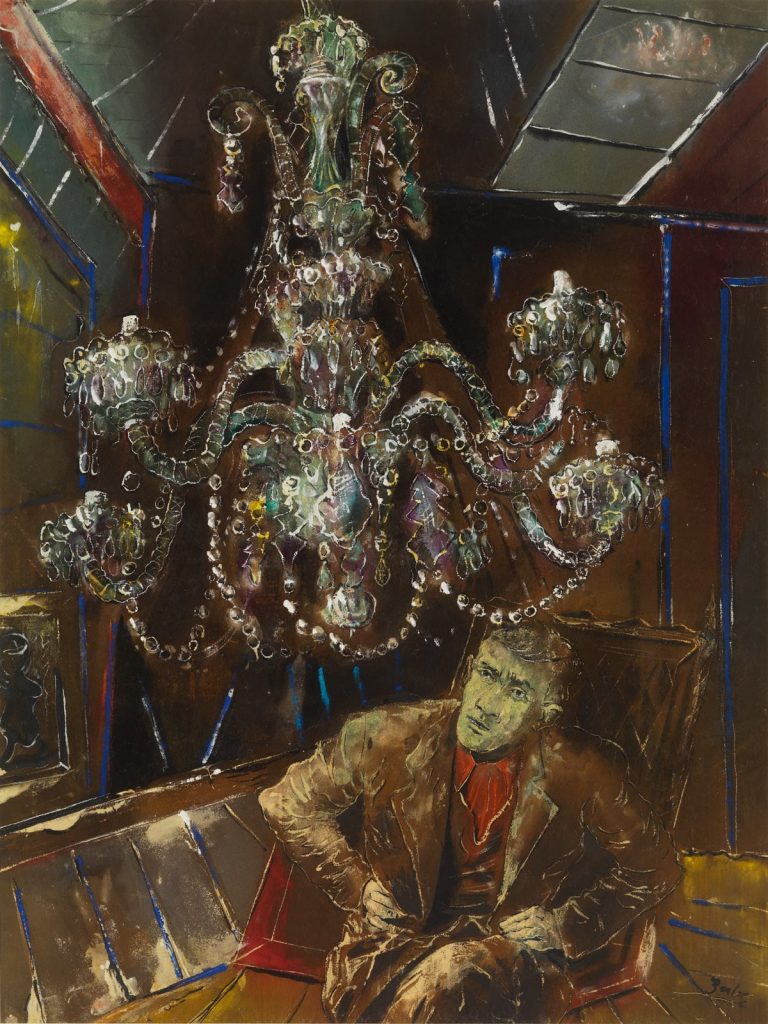
Karl Zerbe
Under the Chandelier
Boston Expressionism, a movement defined by an attention to figural abstraction, was deeply rooted in early twentieth-century symbolism and expressionism in Europe. Working in Boston from the late 1930s through the 1950s, many of these artists studied under Karl Zerbe at the School of the Museum of Fine Arts, although multiple generations of artists working in this expressive vein have followed. Boston Expressionists embraced different aspects of expressionism—the social, the religious, the mystical—but all found commonality in the need to convey a personal and emotional reaction through expressive mark-making. At a time when abstraction was the dominant trend in the art world, these artists retained an element of the figure in their work, using the figure as an expression of the struggle with identifying and codifying an artistic identity.
To learn more or to view pieces from this collection or to schedule a viewing lorem ipsum dolor sit amet